
This op-ed was published on TechDay titles to mark International Women’s Day 2026, and republished below. Read other inspiring articles here: https://techday.co.nz/tag/international-womens-day
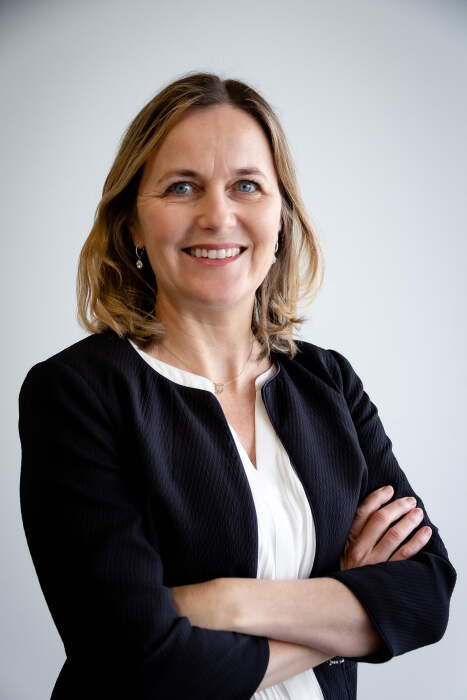
Despite its size, New Zealand is competing on the world stage in a turbulent, innovation-led era. We often speak about productivity gaps, digital skill shortages and the need to lift national performance. Less often do we confront an uncomfortable truth: we are underutilising a significant portion of our leadership potential. Our female leaders.
In a small island nation of five million people, that is not just inequitable. It is economically reckless. New Zealand's economic indicators don't always paint a rosy picture. On many levels we have fallen behind countries we would traditionally compare ourselves to. Yes we should be looking for productivity growth levers, leveraging AI and digital technology and investing in infrastructure. But what about the people who enable all these new innovations to thrive?
We often hear this Māori proverb (whakataukī) quoted: "He aha te mea nui o te ao? He tāngata, he tāngata, he tāngata" – translated to "What is the most important thing in the world? It is people, it is people, it is people".
If we are serious about strengthening NZ Inc, we must address the persistent underrepresentation of female leaders across business, technology and governance. This is not a social issue sitting on the margins of corporate strategy. It is a capability issue at the heart of our economic future.
Our system is leaking talent
Over my career I have seen how early and mid-career barriers compound over time. Confidence gaps, unconscious bias and limited sponsorship all influence whether talented individuals stay, stretch and step forward.
The leadership gap is often described as a pipeline problem. I think it is a design problem. Many leadership pathways still reward uninterrupted, linear career progression and assume access to sponsorship networks that are not equally distributed. These pathways undervalue community and caregiving responsibilities that disproportionately affect women.
These barriers are worse for Māori and Pasifika women leaders. All too often I've seen this talent fade into the background or worse, out the door. What a waste.
Partnerships, partnerships, partnerships
But it doesn't have to be this way. I have seen – and been the beneficiary of – the positive impact of structured programmes and visible advocacy; how mentoring relationships offer advice and sponsorships open doors for females at all stages of their career. And more broadly, positive impact through partnerships with organisations such as Global Women, and networks within companies such as our Pasifika Collective.
As Chair of One New Zealand's charity, Te Rourou, I have seen how partnerships giving access to digital connectivity, education and employment pathways alter life trajectories. Programmes that refurbish and redistribute laptops to students in low-decile schools, or support rangatahi in care, are investments in future capability. When young people cannot fully participate in a digital society we constrain their future contribution to the economy. And often it's girls who disproportionality shoulder whānau responsibilities.
Partnerships are also inherent in supporting diverse communities to thrive. Te Tiriti o Waitangi is foundational for how we should think about partnership, opportunity and participation.
How can we make change?
Here are my takes:
- Policy design matters. Extended paid parental leave and flexible return-to-work arrangements exist not as perks, but as structural interventions to address the "motherhood penalty" that quietly derails many promising careers. When we redesign systems, we change outcomes.
- It's a business, not an HR, problem. When diversity is treated as an HR or corporate responsibility initiative rather than a strategic priority, it rarely shifts economic outcomes. This is not about optics. It is about competitiveness.
- Leadership must be built deliberately. Representation rarely shifts without accountability. Targets such as 40:40:20 are not symbolic gestures; they focus attention and create measurable change. But targets alone are insufficient. Leadership development and sponsorship must be intentional.
- Shift the weight. We need to take some of the weight off the shoulders of our aspiring female leaders: stop telling them they need to "be more x" - more confident; more powerful; more directive; more challenging. What they need is our positive affirmation that they are more than fine as they are; and our active advocacy and influence to help pull them up.
- The leaders of today can influence change. If we want more breakthrough leaders – particularly among Māori and Pasifika – senior leaders must actively use their influence to elevate diverse talent. Leadership does not emerge by accident; it is cultivated through access, exposure and support.
The cost of inaction
New Zealand's growth depends on innovation, sound governance and confident decision-making in the face of complexity. There is no shortage of data to show that diverse leadership teams improve decision quality, risk management and performance.
The cost of inaction shows up in slower innovation, narrower perspectives at decision-making tables and ongoing skill shortages. In a constrained economy, wasted talent is a cost we can no longer absorb.
International Women's Day rightly celebrates progress. But celebration without redesign will not shift economic outcomes.
If we are serious about lifting productivity and strengthening our global competitiveness, we must stop treating underrepresentation as a secondary issue. In a small economy, underutilising women leadership talent is not just inequitable. It is a strategic failure.
New Zealand cannot afford to continue to waste leadership potential.