
There’s a point on most offshore trips where your phone becomes little more than a camera.
You leave the coast behind, the last bar of reception disappears, and that’s that. For generations of Kiwi fishers, boaties and divers, being out of mobile range has simply been part of going further afield. But that assumption has changed.
Satellite-to-mobile technology is extending connectivity into places cell towers have never reached. And in a country like New Zealand with a lot of ocean, a lot of remote coastline and around 40% of the landmass outside traditional mobile coverage that has some pretty practical implications.
Professional skipper and ocean enthusiast Henry Gibbs has experienced the difference first-hand. Henry spends a large part of his life on the water, from chasing kingfish and crayfish closer to home to game fishing, diving and exploring some of New Zealand’s more remote waters. On a trip to the Three Kings, he was diving from a tender when he did something that would once have been impossible with an ordinary mobile phone: he made a WhatsApp call back to the main boat.
“The last few trips I’ve had offshore came with a whole new level of confidence. While diving from a tender around the Three Kings, I was able to use WhatsApp to call back to the boat with One NZ Satellite. Having my phone as another method of communication alongside my EPIRB and VHF is a no-brainer for that added layer of safety and contact.”
A mobile phone isn’t a substitute for the safety equipment you should be carrying offshore. EPIRBs, PLBs and VHF radios remain essential. What satellite-to-mobile offers is another layer and one that happens to be built into the phone most of us already carry everywhere. That might mean messaging home to say the fish are biting and you’ll be later than planned, checking weather information when conditions are changing or keeping in contact with people elsewhere on the water.
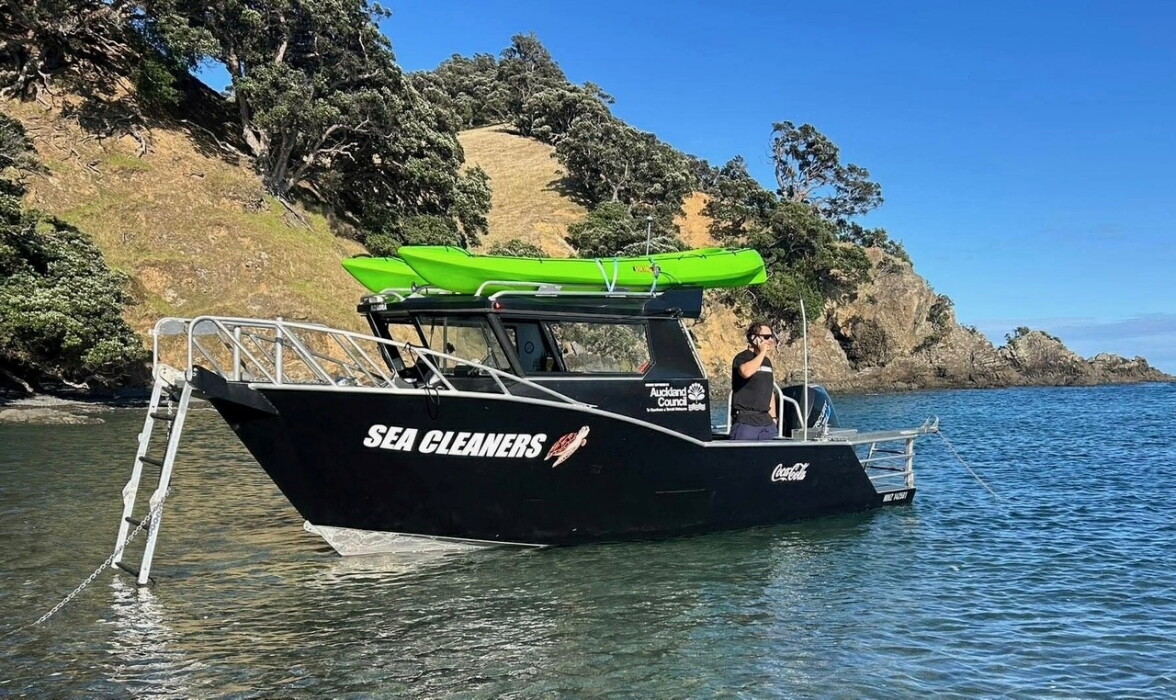
It’s already changed the way some organisations operate offshore. Sea Cleaners spends its days removing rubbish from New Zealand’s coastlines and waterways, regularly sending crews into areas outside traditional mobile coverage. “It’s dramatically improved our communication on the water,” says Founding Trustee Hayden Smith. “We’ve gained safety and productivity benefits we’ve never had before.”
There’s something particularly Kiwi about the problem satellite-to-mobile connectivity can solve. We’re a country where getting away from it all is remarkably easy. Our geography is part of what makes New Zealand special, but it sometimes makes keeping people connected extraordinarily difficult.
One NZ has been at the forefront of bringing satellite-to-mobile technology to Aotearoa, allowing eligible phones and plans to connect directly to satellites when cell tower coverage disappears. One NZ Satellite supports TXT and select apps out to 85 nautical miles offshore with a clear line of sight to the sky.
It won’t replace good planning, good judgement, or the right safety gear. But the next time the coastline disappears behind you, your mobile could keep you connected via space instead.
one.nz/satellite
TXT/MMS in minutes and use data on select apps. Requires eligible phone and plan, and line of sight to the sky. Limited app features. Paid Add-On may apply. Terms, fair use, standard MMS charges and capacity control applies.
Nobody knows satellite connectivity like the team at One New Zealand do, which is why they’ve been recognised with an Innovation Excellence Award by Canstar.