
Imagine you could see New Zealand’s mobile network as a landscape of invisible highways in the sky.
The backbone of this world isn’t the phone in your pocket - it’s the many cell sites scattered across our cities, towns and highways, connecting your phone to the mobile network.
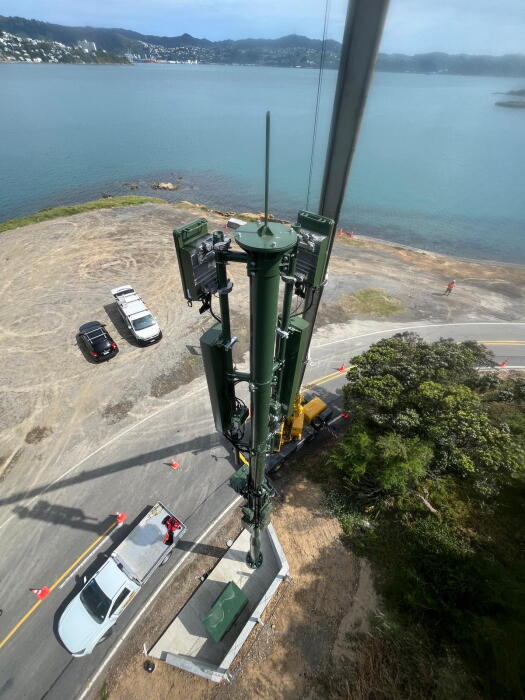
A cell tower is more than just a physical structure. What really matters for mobile coverage is the radio technology and spectrum that each network uses. That's the equipment that keeps you connected to your whānau and friends wherever you are. At One NZ, our mobile radio equipment is installed across the nation on thousands of structures, including cell towers, on rooftops, poles, and on shared rural sites. Cell towers are the large mast like structures that you might notice from a motorway or on an urban ridge. By comparison, cell sites are less visible, sometimes described as "street furniture", maybe looking like a lamppost, or sitting on top of a building.
But here’s one key distinction that often gets missed: New Zealand's telcos don’t own the cell towers any more. Specialist infrastructure companies typically build, own and maintain New Zealand's cell towers, while telcos like One NZ own and operate the radio equipment and electronics installed on those structures.
If you think about a mobile network like a road network, then the tower company is the road owner and builder, meaning they provide the physical infrastructure. The telco is the transport operator - they look after and run the vehicles (the radio equipment) that carry customers’ calls and data. Radio spectrum is like the traffic lanes those vehicles travel on, and the core network is the logistics hub that routes everything to its final destination. Adding spectrum is like adding another lane to a busy motorway, where it creates more space for everyone’s data to travel, reducing congestion and improving performance, especially at peak times. Multiple transport operators can use the same road infrastructure - just as multiple telcos can operate from the same cell tower.
There are two main ways to add more spectrum capacity to a mobile network.
The first is by upgrading existing cell sites with additional equipment to broadcast new frequencies. This maximises the use of existing infrastructure, but there are limits to how much traffic a single site can handle, even with advanced technology.
The second option is to build new towers or new cell sites closer to where demand is highest. This shifts traffic from more distant sites, improves performance for users nearby, and frees up capacity on surrounding towers. That's why new cell towers continue to be built in high-growth and high-traffic areas.
In New Zealand there are a few big players in tower infrastructure:
- Fortysouth owns about 1,700 cell towers and covers roughly 98% of the population with passive infrastructure that hosts equipment from One NZ and other telcos.
- Connexa owns more than 2,500 towers and works with all three major mobile networks to deploy radio equipment to enable digital connectivity throughout New Zealand
- The Rural Connectivity Group (RCG) owns about 500 towers and is a joint venture between One NZ, Spark, 2degrees and the government, building shared cell towers in rural and hard-to-reach areas. This joint effort allows all three telcos to use the same antennas and network kit on a shared structure; each TelCo chooses what they deploy on those towers. The RCG network covers a wide geographic area across New Zealand.
It's important to know that having more cell tower structures doesn’t equate to having great mobile coverage. What matters for your coverage is the radio equipment and radio spectrum that your telco has on those towers and on its own cell sites - that’s what your phone actually connects to.
One NZ's mobile network delivers 4G and 5G coverage to 99% of where Kiwis live, work, and play, and this is now supplemented by Satellite to mobile coverage for data and for messaging. Our partnership with the Rural Connectivity group means we have great national coverage in Rural areas, alongside our strong geographic coverage and marine coverage.
Satellite as part of the mix.
In December 2024, One NZ became the first company globally to go beyond traditional mobile coverage when it launched the One NZ Satellite service*. Satellite-to-mobile enables users with eligible phones and plans to use select apps and send TXTs via satellite to stay connected when outside of traditional cell-tower coverage wherever they can see the sky. Going back to our road analogy, this is like adding a capable 4x4 vehicle to the network - not as fast as travelling on a motorway, but able to reach the most remote corners of the country, even at the end of the roughest track.
We design our mobile network so that coverage from multiple cell sites overlaps wherever possible - more than just on cell towers. This allows for a smooth experience as you move with your phone, seamlessly handing over from one cell site to the next - keeping your calls connected and video streams running without interruption. It also means if a cell site is damaged or taken offline, maybe during a power outage after a severe weather event, then the surrounding sites will help fill in some of the coverage gaps until we can get equipment to site to restore full service.
So, mobile coverage is delivered via our nationwide interconnected mobile network, built with a complex array of physical and digital infrastructure. But ultimately, the most important part of coverage is being connected where you are - the areas where kiwi live, work, and play (and beyond).
*One NZ Satellite: Use data on select apps and TXT/MMS in minutes. Requires eligible phone and plan, and line of sight to the sky. Limited app features. Paid Add-On may apply.
Terms, fair use, standard MMS charges and capacity control applies. See Satellite to mobile
One NZ's mobile network now provides 99% population coverage, and no other New Zealand provider claims more.
It was 2022 when Vodafone NZ, Spark, and 2degrees began to sell their cell tower infrastructure.